Cost & Savings

Initial Cost

The following information is provided as a ‘Guide Only’ to the cost of having Hiandri bottom plate packers installed on the bottom of 90mm timber frames manufactured in a frame and truss plant. Every house is different depending on stud spacings, size and number of openings, point loads etc. Get a quote from your preferred frame and truss plant.


The following costs are based on a single storey average New Zealand dwelling of 200m² with a concrete floor, with studs at 600mm centres. Costs exclude GST.

Plant Costs

Supply and fix HIANDRI bottom plate packers

$400

Less cost of DPC (as not required)

$150
Balance
$250

Fixing bolts

The number of bolts used to fix the bottom plates on the average 200m² home could vary from 90 – 150 bolts. Hiandri require a through bolt length of at least 135mm. A large percentage of the country are already using this length bolt to fix their plates and therefore, no additional cost is incurred.

Drive Pins

The length of the powder driven drive pins have been increased from 75mm to 90mm. A 200m² dwelling requires approximately 200 pins – additional cost of $46.

Foam Insulation

Approximately 1.5 cans of profoam will be required to seal the exterior frames.

1.5 cans profoam

$30.00

Labour to install foam – 1 hour @ $50.00

$50.00

Additional cost for 90mm drive pins

$46.00

Total initial costs to install Hiandri packers on a 200m² dwelling

Total
$376.00

Potential Savings

It is not always easy to identify and quantify the potential cost savings when installing a system such as the Hiandri bottom plate packers, there are so many variables, but we know the savings are significant on any building project.


The potential savings are not only achievable during the construction phase of a new build but there are some long term potential savings that can affect every owner of the building over its life-span.

Pre-line Delays

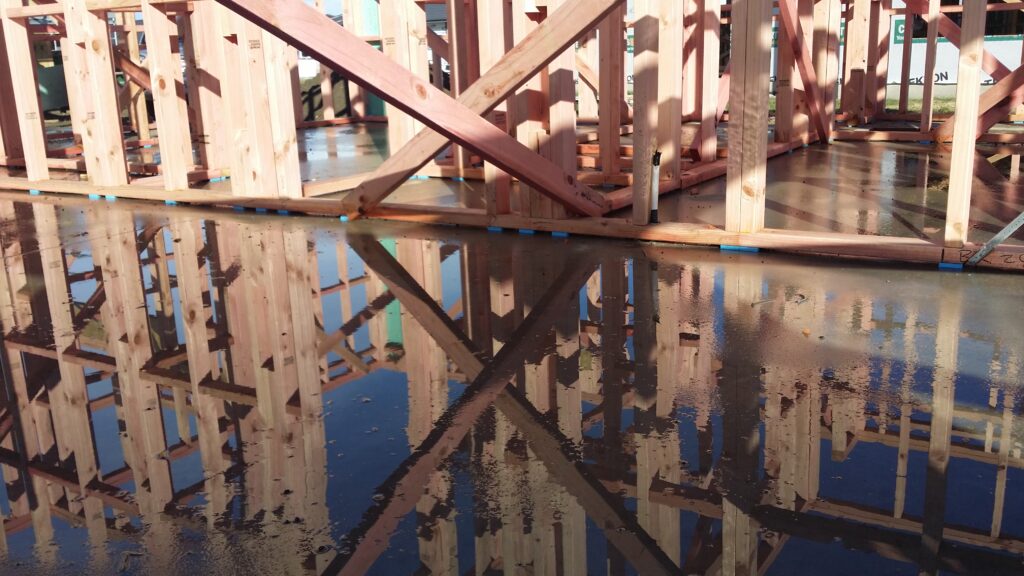
If the moisture content in the frames, especially the bottom plate, exceeds 18%, the plasterboard manufacturers state you cannot install their product.


The two choices here are to either wait for the moisture content to drop to 18% or less, which could take weeks, or mechanically dry the frames using heaters and dehumidifiers, which will still take time.


Mechanical drying costs between $1500 and $2000 per week for a simple single store\y dwelling, and it may take more than one week to achieve the goal. On top of that, you may have a hefty power bill, and at least one other council inspection to check the moisture reading, at approximately $175 per visit.


In addition to these costs, there are holding costs on the total money invested in the project and if you or your men are unable to work as a result of these delays, the cost may be in the order of $1500/week/man.

Wall Linings – Remedial Work

Achieving as low moisture content as practically possible at the time wall linings are installed, is paramount to the performance and appearance of the finished surface of that lining, particularly over the following two years.


Timber movement, either shrinkage or swelling, can result in peaking and popping of the screws used to fix the linings, and this is directly related to the change in moisture content of the framing timber. The cost of remedial work to repair peaking, popping and sheet movement, plus a repaint, is not an inexpensive exercise.


Hiandri bottom plate packers help achieve as low a moisture content in the frame at the time of lining, as practically possible and therefore reduces the risk of expensive remedial work.

frequently asked questions

Do you have a specific question in mind? Have a look at our FAQs as your query may have already been answered by our team there

Technical Assistance

Download our Installation Guide or speak to Sam, our specialist located in New Zealand

SAVING KIWI BUILDERS THOUSANDS

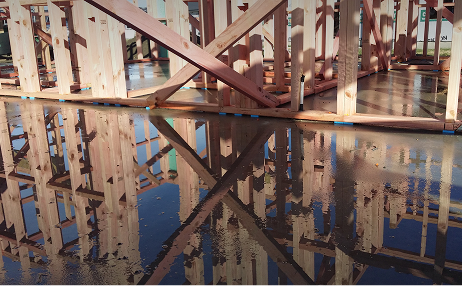
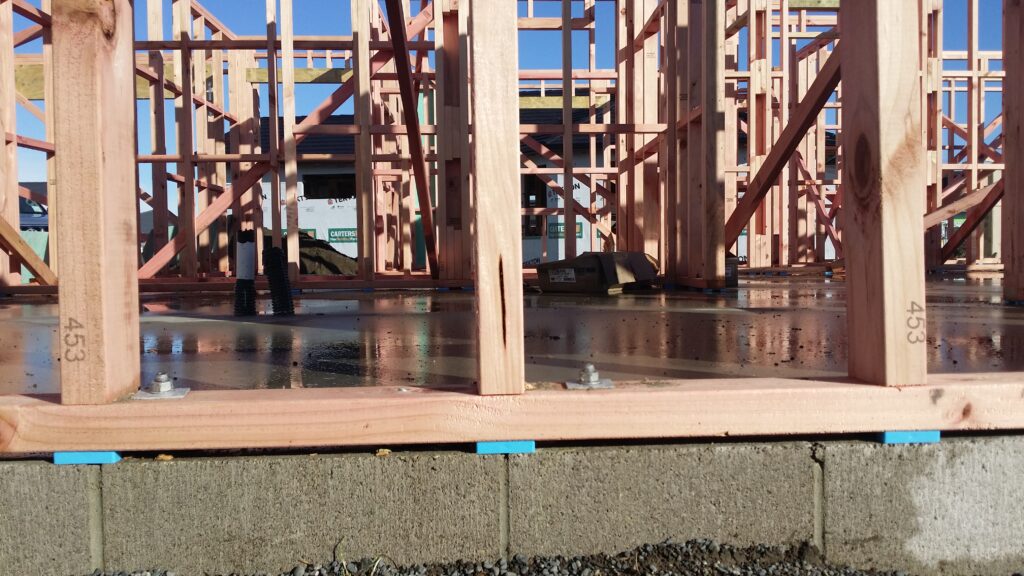
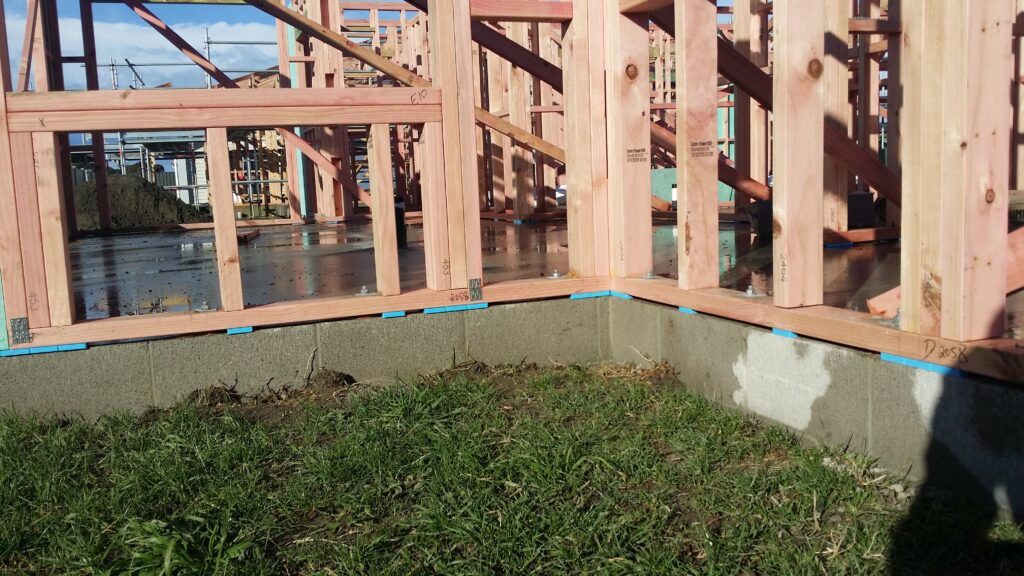
Our CodeMark approved system rasies the frame above the slab, protecting bottom plates from moisture, eliminating the need for DPC, and allowing drainage preventing costly wet frame delays.

The HIANDRI system has been fully engineered to satisfy the requirements of NZS3604:2011, NZS1170:2002, NZ AS1720.1:2022 their amendments and the Building Code. More importantly HIANDRI packers have CodeMark Certification and are BRANZ appraised. Submitting the CodeMark Certificate and Installation Instructions to the Building Consent Authority (BCA) is an acceptable solution.

How much weight can one packer hold?
Under NZS3604, a single stud can only take a load of 10kN. HIANDRI Packers have been compression tested and fail at over 40kN or 4 Tonne.
NO, there is no load on the plate between the studs so there is no reason for the plate to sag. HIANDRI Packers are made from Polypropylene, it is called the steel of plastics; it is very hard and strong and capable of carrying at least 4 times the load that a stud can carry.

YES, however the bottom plates must be fixed using 125mm long Type 17 Buildex 14gauge Bugle head screws – Refer to ‘Installation Manual’.

YES. It can be installed in any location permitted under NZS3604 and NZS1170 and their amendments.
NO. You should place a packer only under every stud at either 400mm or 600mm centres, and also additional packers at all point loads and lintel studs. However, you only require a single packer for double studs for internal doors and a single packer for stud/block/stud situations (ie. Wall intersections) – Refer to ‘Installation Instructions.’

Certifications

Codemark Certificate
Branz Appraisal

Installation Manual

The easy fix for drier frames tag line here

The HIANDRI system has been fully engineered to satisfy the requirements of NZS 3604:2011, NZS 1170:2002, NZS AS 1720.1:2022 their amendments and the Building Code. More importantly HIANDRI packers have CodeMark Certification and are BRANZ appraised. Submitting the CodeMark Certificate and Installation Instructions to the Building Consent Authority (BCA) is an acceptable solution.

Installation Instructions

Acceptable layouts & orientation of HIANDRI packers, for timber and concrete floors.

Fixing Bottom Plates

Further details on fixing bottom plates on concrete and timber floors.

Bracing

Refer to our currently approved bracing systems and recommendations for fixings.

Trusted by builders like you

GENUINE FEEDBACK from real builds

Lorem ipsum dolor sit amet consectetur. Sit sed tempor leo lacinia. A pellentesque sodales odio aliquam. Velit suspendisse nibh eget felis et quis. Tellus orci feugiat turpis est nibh.